More Americans Are Driving Without Insurance — The Real Reason Will Surprise You
More Americans Are Driving Without Insurance — The Real Reason Will Surprise You
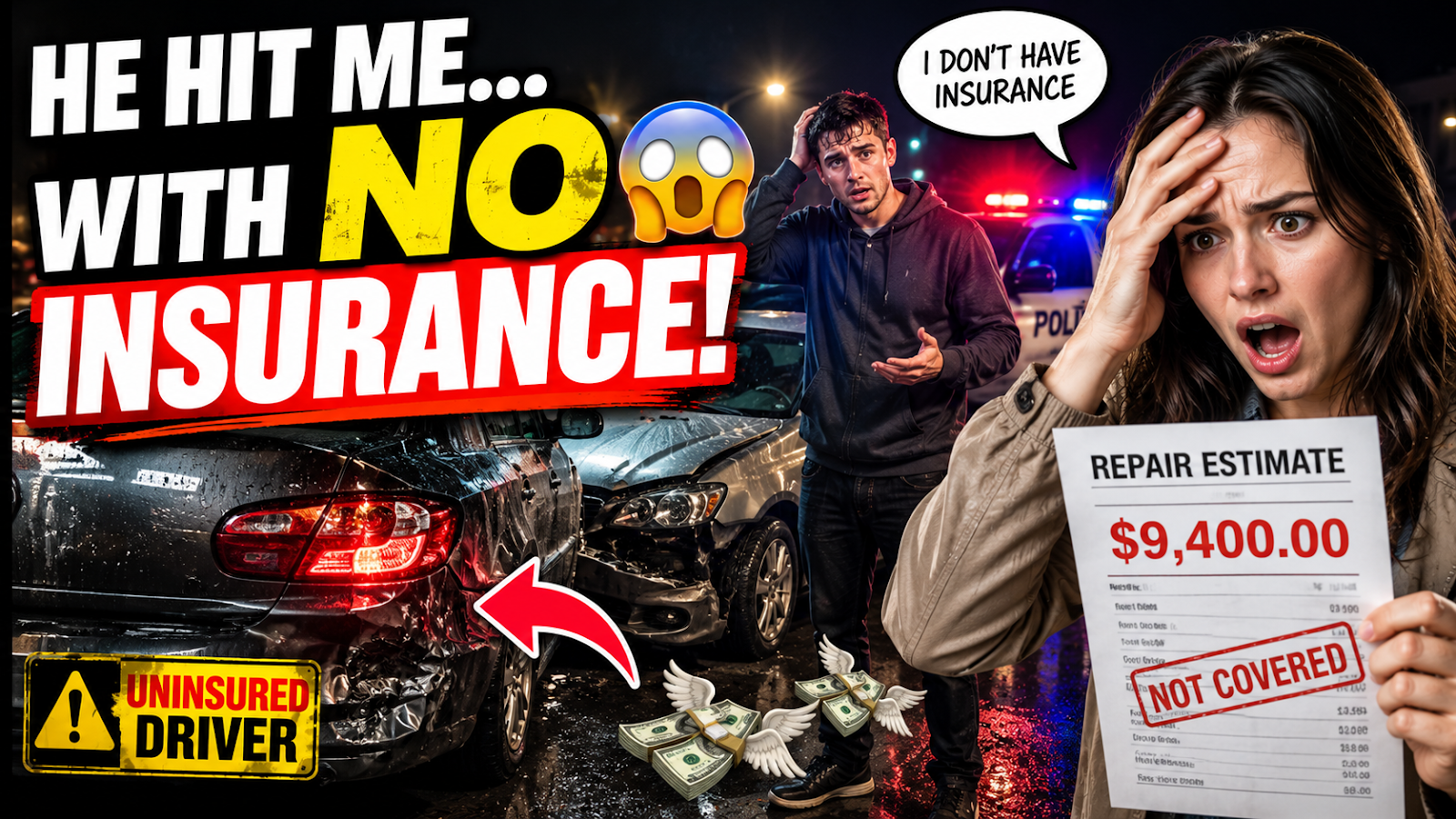
Imagine this.
You're sitting at a red light, completely still, minding your own business. Then, out of nowhere, a car slams into you from behind. You're shaken, maybe injured. Your car is damaged.
You get out. The other driver looks at you with a face full of guilt and says four words that will haunt you for months:
"I don't have insurance."
This isn't a rare horror story anymore. It's happening every single day across America — and the numbers are getting worse, not better.
The Crisis Nobody Is Talking About Loudly Enough
Here's a number that should stop you cold.
In 2023, 15.4 percent of motorists — more than one in seven drivers — were uninsured, according to a 2025 Study by the Insurance Research Council.
Let that sink in for a moment.
That means there are roughly 32 million people driving on American roads today without any insurance coverage. Thirty-two million. That's more than the entire population of Texas.
And this isn't a problem that's been sitting still. In 2019, about 11% of American drivers lacked auto insurance. By 2020, that figure jumped to roughly 14%. The pandemic and economic pressures played a major role in this sudden surge.
The trend is clear. The crisis is real. But why is it happening?
That's where things get interesting — and uncomfortable.
The Obvious Answer Isn't the Whole Story
Most people assume uninsured drivers are simply irresponsible. Reckless. People who just don't care about the rules.
That assumption is wrong.
The truth is far more complicated — and far more alarming — because it implicates a system that's quietly pricing millions of law-abiding Americans out of their legal obligation.
About 82% of uninsured drivers say they simply cannot afford car insurance.
That's not laziness. That's not defiance. That's desperation.
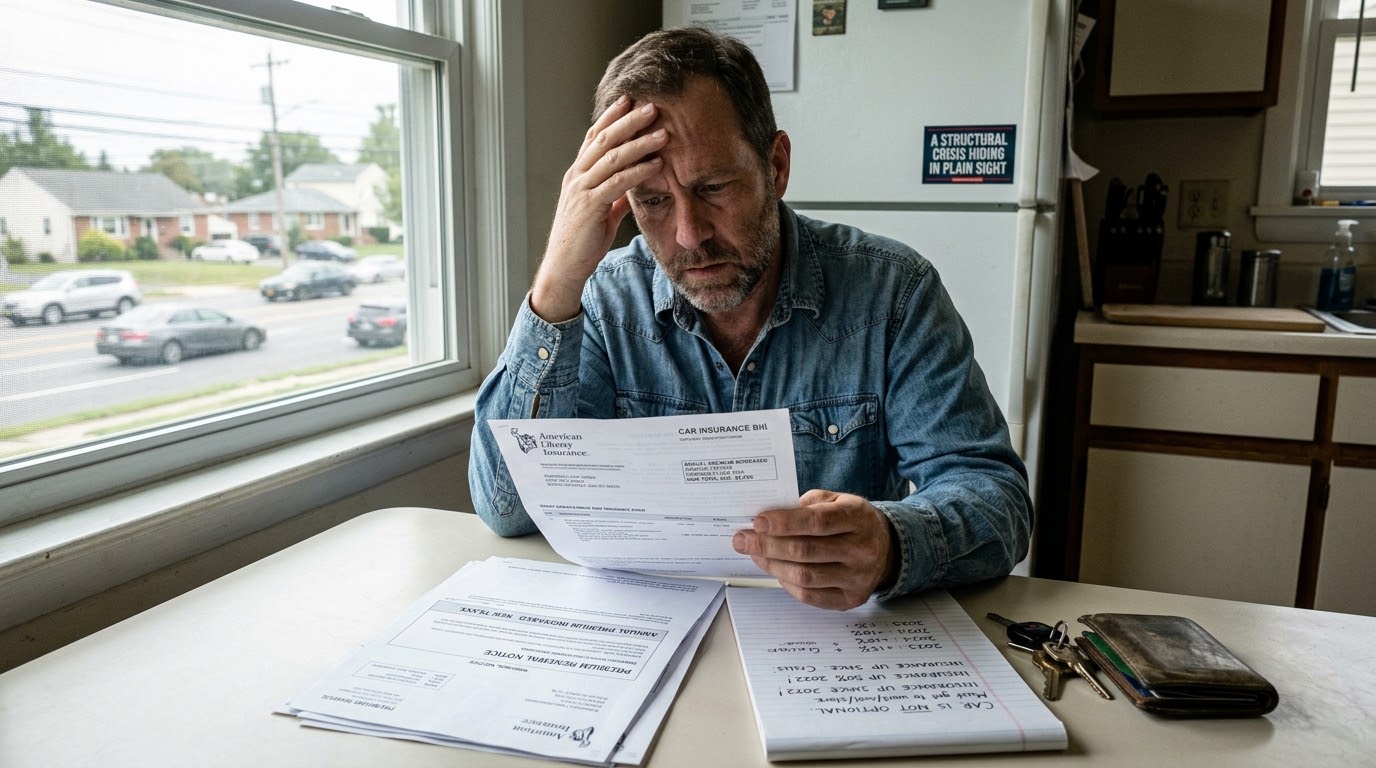
And when you look at what's happened to insurance premiums over the past few years, you start to understand why so many people are making a choice they know is risky — because the alternative feels even more painful.
What Happened to Car Insurance Prices?
Not long ago, car insurance was expensive but manageable. It was one of those monthly bills you grumbled about and paid anyway.
Then everything changed.
The Consumer Price Index for car insurance increased by 27% from the beginning of 2015 to the beginning of 2020. But from the start of 2020 to the start of 2024, it surged by 39%.
Think about that trajectory. More than a decade of gradual increases, then one giant leap in just four years.
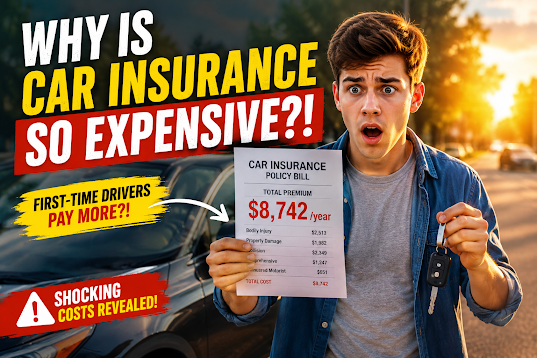
Car insurance rates jumped 26% on average across the country in 2024 alone, according to a report from Bankrate. That comes out to around $2,543 for an annual premium — a more than $500 increase over the previous year.
Five hundred dollars more. In a single year.
With the average cost of full coverage now sitting at $205 per month as of late 2024, affordability has become one of the primary reasons why there are so many uninsured drivers on American roads today.
For a family already stretched thin by rent, groceries, and gas, that $205 a month isn't just a bill. It's a decision between insurance and dinner.
The Real Culprits Behind Skyrocketing Premiums
So what's driving the price of car insurance into the stratosphere? It's not one thing. It's a perfect storm of several things colliding at once.
First, there's the rising cost of car repairs. Modern vehicles are loaded with high-tech sensors, cameras, and complex safety systems. When one of these gets damaged in even a minor fender-bender, the repair costs can be staggering. A bumper that once cost $400 to fix can now run several thousand dollars because of the radar sensors embedded in it.
Second, there's inflation. Record inflation, higher vehicle repair costs, and more frequent and costly natural disasters have all contributed to rising premiums, according to senior analysts at Aceable. When the price of everything goes up, insurance companies feel it too — and they pass those costs directly to you.
Third, there's the weather. In 2023, there were 28 weather and climate disasters in the U.S., breaking the previous record of 22 set in 2020, according to a NOAA report. Every hurricane, flood, hailstorm, and wildfire means billions in claims. And those billions get absorbed into future premiums.
Fourth — and this one might surprise you — distracted driving. Higher accident rates can be attributed to congested highways in larger cities and drivers being distracted by in-car technology and smartphones. Distracted driving has become the leading cause of car crashes, leading to more claims being made to insurance companies.
When more crashes happen, more claims are filed. When more claims are filed, premiums go up. When premiums go up, more people drop their coverage. It's a vicious, self-reinforcing cycle.
The States Where the Problem Is Worst
The uninsured driver crisis isn't evenly distributed across the country. Some states are fighting a far more severe battle than others.
More than 20% of drivers are uninsured in Washington D.C., New Mexico, Mississippi, Tennessee, Michigan, Missouri, Florida, and California.
Read that list again. These aren't small, forgotten places. Florida. California. Michigan. Some of the most populated states in the nation.
The number of states where more than 20% of drivers are uninsured doubled from 2022 to 2023. Doubled. In a single year.
At the other end of the spectrum, Wyoming, Maine, and Idaho had the lowest percentages of uninsured drivers, at 5.9%, 6.2%, and 6.2% respectively. These states tend to have lower population density, lower overall living costs, and — perhaps not coincidentally — lower average insurance premiums.
The geography of the uninsured driver crisis tells us something important: this is an affordability problem, not a character problem.
Meet the Faces Behind the Statistics
Numbers are powerful. But they can also make us forget that every percentage point represents a real human being making an impossible choice.
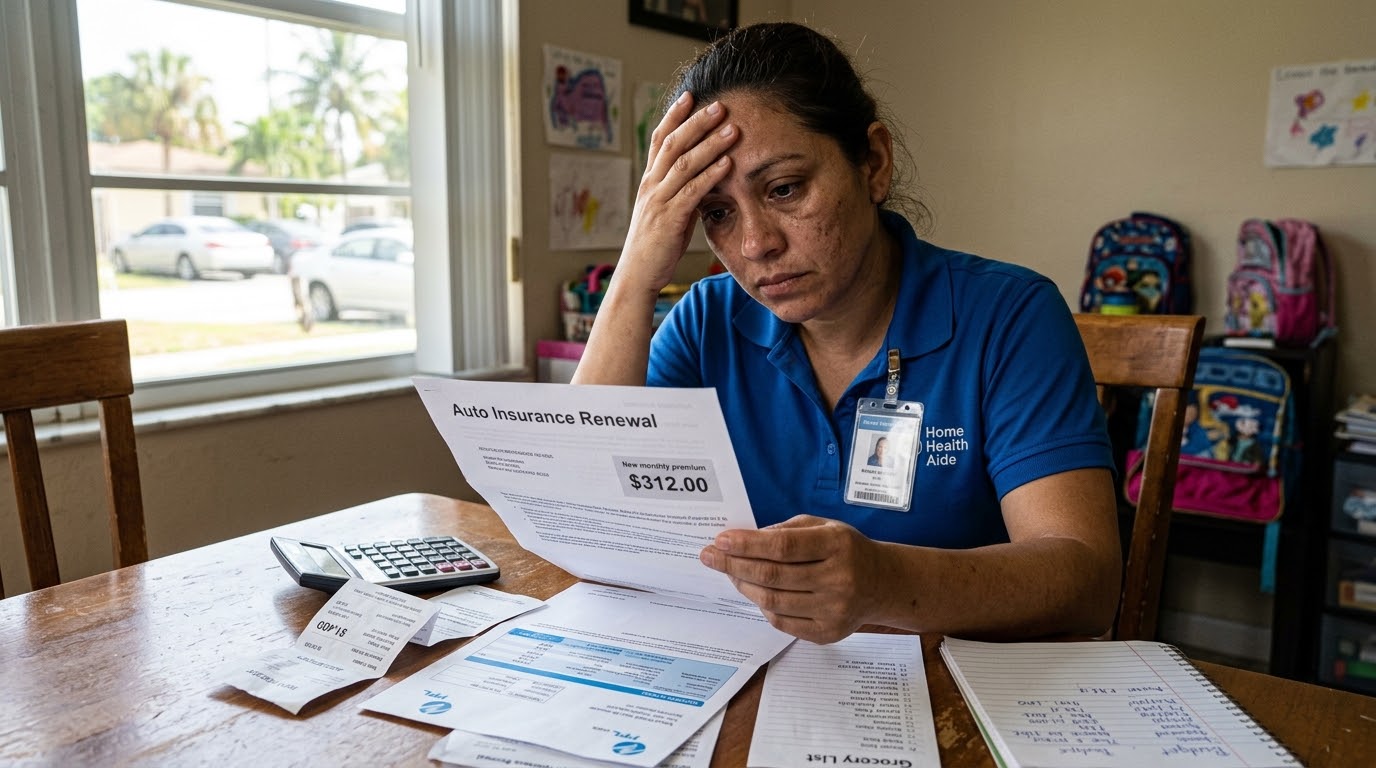
Consider Maria, a 34-year-old home health aide in Miami. She earns $17 an hour, works 40 hours a week, and takes home about $2,300 a month after taxes. Her rent is $1,400. Her car payment is $350. Groceries, utilities, her kid's school supplies — all of it adds up fast.
Her insurance renewal came in the mail last spring. The new premium was $312 a month.
She stared at that number for a long time. Then she did the math. And then she made a decision she hated making.
She's not alone. She represents millions of Americans who aren't criminals or deadbeats. They are ordinary people crushed between an economic reality that demands car ownership and an insurance market that has become unreachable.
When forced to choose between paying rising premiums or covering other essentials, some drivers take the gamble of dropping their coverage.
It's not a gamble they take lightly. It's one they take because they see no other way.
The Domino Effect: How This Hurts Everyone
Here's where the story takes a darker turn.
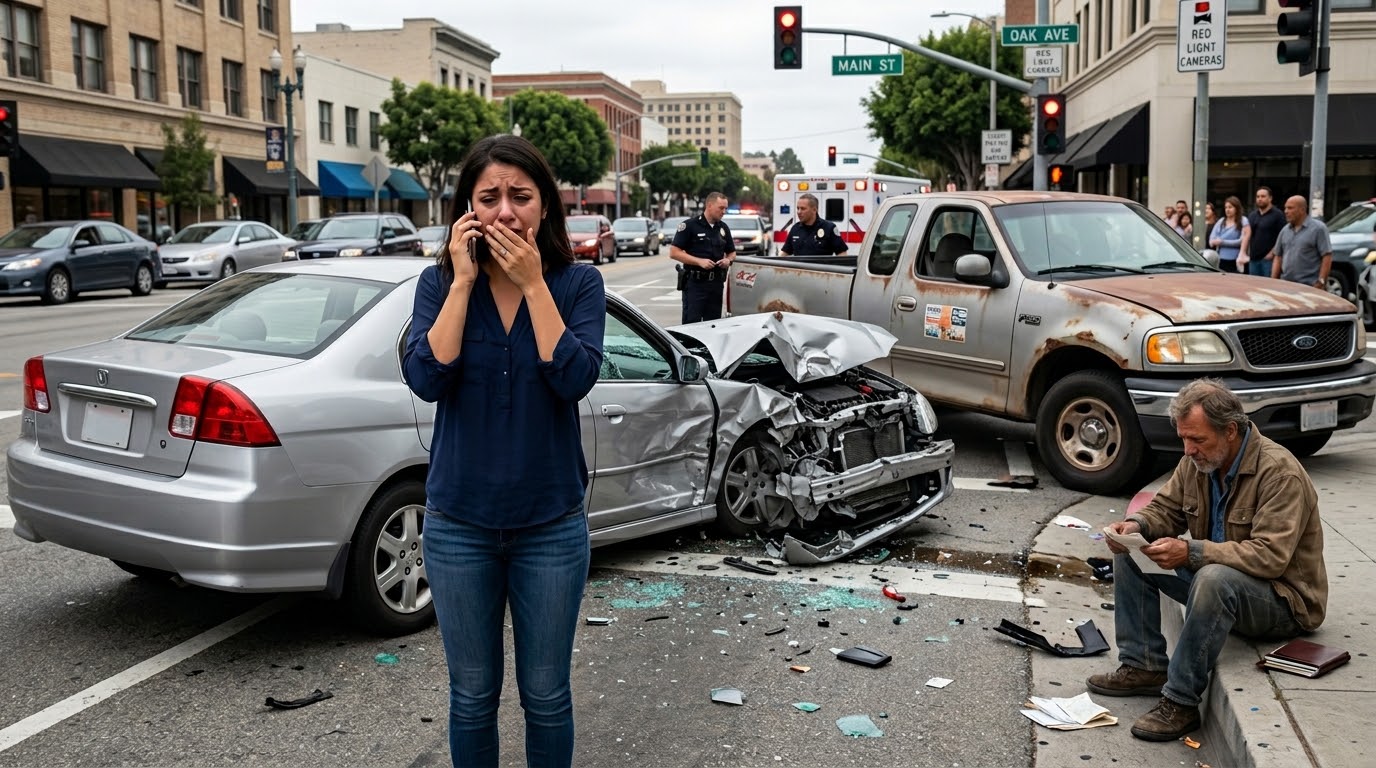
When millions of drivers go uninsured, it doesn't just affect them. It affects you — even if you've never missed a single premium payment in your life.
Uninsured drivers still cause accidents, but now insurance companies have fewer paying customers to help absorb the costs. This creates a domino effect that drives premiums even higher for those who remain insured.
Think about the math. If a pool of 100 drivers shrinks to 86 paying customers because 14 dropped coverage, but the total number of accidents stays the same, the cost of those accidents gets divided among fewer people. Everyone's share goes up.
The increasing frequency of uninsured drivers strains insurance companies financially. When insurers are forced to cover the costs of accidents caused by uninsured drivers, those expenses increase — and get passed on to all policyholders.
This is the cruel irony at the heart of the crisis. The people who drop coverage because they can't afford it are inadvertently making insurance more expensive for those who can barely hold on. And as prices rise, more people drop out. And on it goes.
What Happens If an Uninsured Driver Hits You?
Let's make this personal for a moment.
You're covered. You do everything right. You pay your $205 a month like clockwork. And then one Tuesday afternoon, an uninsured driver runs a red light and totals your car.
What happens next?
If you don't have uninsured motorist coverage, you could be left chasing a person who has no money and no insurance for compensation that may never come. Your car could be totaled, your medical bills could pile up, and your only recourse might be a lawsuit against someone with nothing to take.
That's why many people in the U.S. have insurance coverage specifically for accidents that uninsured drivers cause — known as uninsured motorist coverage.
In 21 states and Washington D.C., uninsured motorist coverage is mandatory. However, some states allow drivers to reject the coverage in writing.
If you live in a state where it's optional, this is worth thinking about very carefully. With one in seven drivers uninsured, the odds that you'll encounter one at some point in your driving life are not small.
The System Is Broken — And Nobody Agrees on How to Fix It
This is the part of the conversation that gets uncomfortable, because there's no clean solution.
Some argue that states need to enforce insurance requirements more aggressively. Better verification systems, heavier fines, stricter consequences for uninsured drivers. More than half of all states have already passed laws and begun developing online auto insurance verification systems to identify uninsured motorists.
But critics point out the obvious flaw: if someone genuinely cannot afford insurance, threatening them with a fine they also can't pay doesn't solve anything. It just compounds their hardship.
Others argue that the insurance industry itself needs reform. That pricing models need to be more equitable. That low-income drivers need access to more affordable minimum-coverage options.
Analysts at Bankrate note that car insurance is essentially reactive — the premium increases we're seeing now are a result of insurance companies trying to recoup losses from recent years while accurately assessing the risk of future claims.
In other words, the industry isn't being malicious. It's responding to economic reality. But the result is a system that punishes the people least equipped to bear that punishment.
What You Can Do Right Now to Protect Yourself
Whether you're uninsured, underinsured, or fully covered, there are practical steps you can take today.
If you're currently uninsured, don't assume you're locked into the prices you've been quoted before. The insurance market shifts constantly, and new options appear regularly. Comparison shopping using platforms like The Zebra or Bankrate's comparison tool can uncover significant savings you didn't know were available.
If you're currently insured, consider reviewing your policy for uninsured and underinsured motorist coverage. Given the current landscape, this is no longer a luxury add-on. It's a necessity.
Also consider raising your deductible in exchange for lower monthly premiums. This approach works well if you have a modest emergency fund and are a low-risk driver with a clean record.
Bundle your home and auto insurance with the same provider. Most companies offer meaningful discounts for doing this, and many drivers leave that savings on the table without realizing it.
Finally, ask your insurer about usage-based insurance programs. These programs track your driving habits through an app or device and reward safe, low-mileage drivers with lower premiums. For someone who works from home or drives infrequently, this can be a game changer.
The Bigger Picture: What This Crisis Reveals About America
Step back from the statistics for a moment. Look at what's really being said here.
We live in a country where owning a car is not optional for most people. Public transportation is limited. Cities are spread out. Jobs require commutes. Life requires mobility.
At the same time, we have a system where the cost of legally participating in that mobility has risen so fast, so high, that tens of millions of people simply cannot keep up.
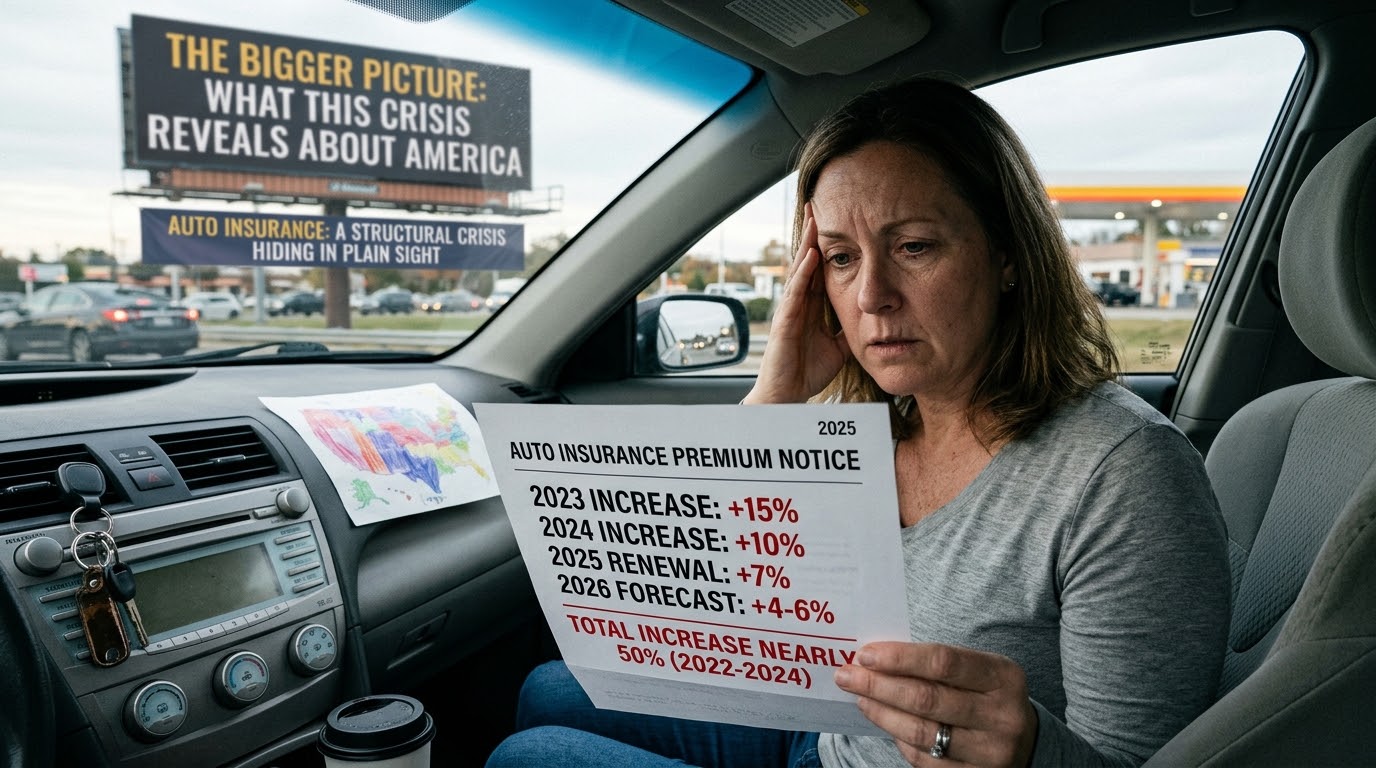
Premiums rose about 15% in 2023 and 10% in 2024, before easing to an average 7% increase in 2025. Forecasts for 2026 suggest more increases, though at a slower pace.
"Slower" doesn't mean "over." And for families already stretched to the breaking point, even a 4% increase can be the difference between staying covered and joining the growing ranks of the uninsured.
The average annual premium jumped nearly 50% from 2022 to 2024. That is not a market hiccup. That is a structural crisis hiding in plain sight.
The Surprising Truth the Headlines Keep Missing
Here's the pattern interrupt.
Every time there's news about uninsured drivers, the framing is almost always the same. There are warnings, there are crackdowns, there are calls for better enforcement. The uninsured driver is cast as the villain — the irresponsible rule-breaker endangering everyone else on the road.
But the data doesn't support that narrative.
When 82% of uninsured drivers say they're uninsured because they can't afford it — that's not a story about irresponsibility. That's a story about an affordability crisis that has been allowed to spiral out of control while the systemic causes go largely unaddressed.
The real villain isn't the driver who reluctantly dropped their coverage last month. The real story is the convergence of rising repair costs, climate disasters, inflation, reckless driving trends, and an insurance industry playing catch-up — all of it colliding on the backs of ordinary Americans who are already stretched as thin as they can go.
That's the story that deserves attention. That's the conversation we need to be having.
Conclusion: A Problem That Demands More Than Blame
The rise of uninsured drivers in America is not a moral failing. It is an economic signal — a flare shot into the sky by millions of people who cannot keep up with the cost of a legally mandated requirement.
The numbers are clear. From 2017 to 2023, most states saw increasing trends in uninsured motorist rates. The direction is unmistakable. And without meaningful intervention — whether through industry reform, state policy changes, or new models of affordable coverage — that trend will continue.
For you, as a driver on American roads today, the takeaway is simple and urgent. Protect yourself. Get uninsured motorist coverage if you don't have it. Shop your rates aggressively. Explore every discount available to you.
Because you can do everything right — pay your premiums faithfully, drive carefully, follow every rule — and still end up blindsided by someone who had no choice but to get behind the wheel without insurance.
The system put them there. And until that system changes, the risk is yours.
Drive safe. And drive protected.
For more information on uninsured motorist statistics and coverage options, visit the Insurance Information Institute or Bankrate's auto insurance center.
Comments
Post a Comment
Silahkan anda berkomentar dengan baik, jangan melakukan Spam, jangan menyisipkan link aktif,
terima kasih.