The EV Insurance Crisis: Why Repair Costs Are Destroying Premium Prices
The EV Insurance Crisis: Why Repair Costs Are Destroying Premium Prices
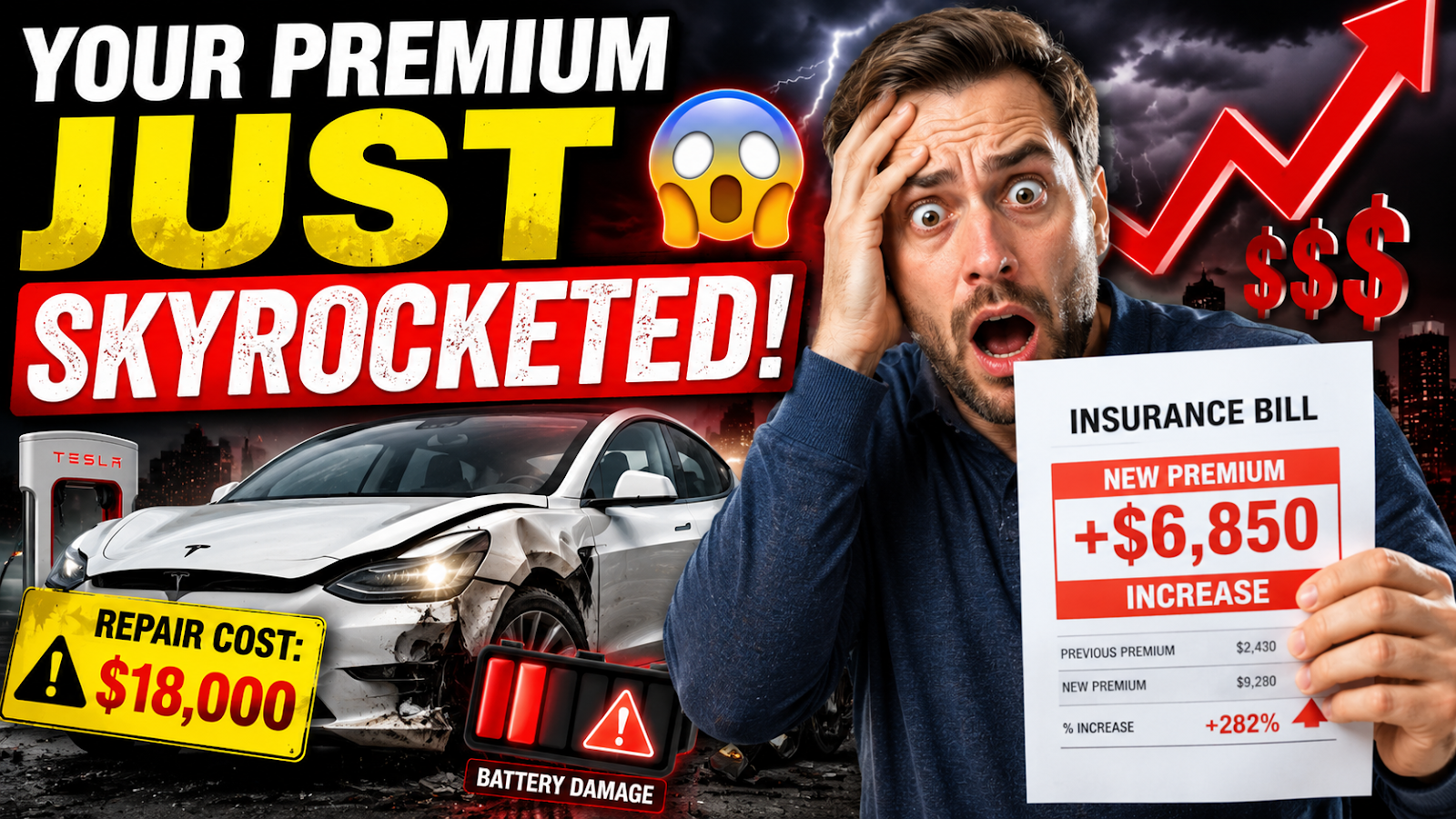
You bought an electric vehicle to save money. Lower fuel costs. Fewer maintenance visits. A cleaner conscience. Then the insurance bill arrived. And suddenly, the math stopped making sense.
This is the quiet crisis no one warned you about when you drove off the dealership lot. EV ownership comes with a hidden financial landmine, and millions of drivers are stepping on it right now — one premium renewal at a time.
The Numbers That Should Scare You
Let's start with cold, hard facts.
The national average insurance premium for an EV is $4,058 per year, or $338 per month. For gas-powered vehicles, that same average sits at $2,732 per year, or $228 per month.
That's an extra $1,326 every single year. Just for owning an electric vehicle.
Multiple studies across 2025 and into 2026 show EV insurance averaging roughly 20 to 50 percent higher than comparable gas vehicles, with annual premiums for many popular models landing in the $3,500 to $4,000 range.
And here's the part that stings most: this gap isn't being driven by how often EVs crash. It's not about reckless driving or accident rates. The cost discrepancy is driven largely by repair economics rather than safety or crash risk.
The Real Villain: What Happens After the Crash
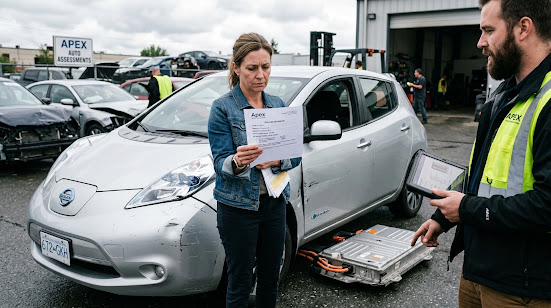
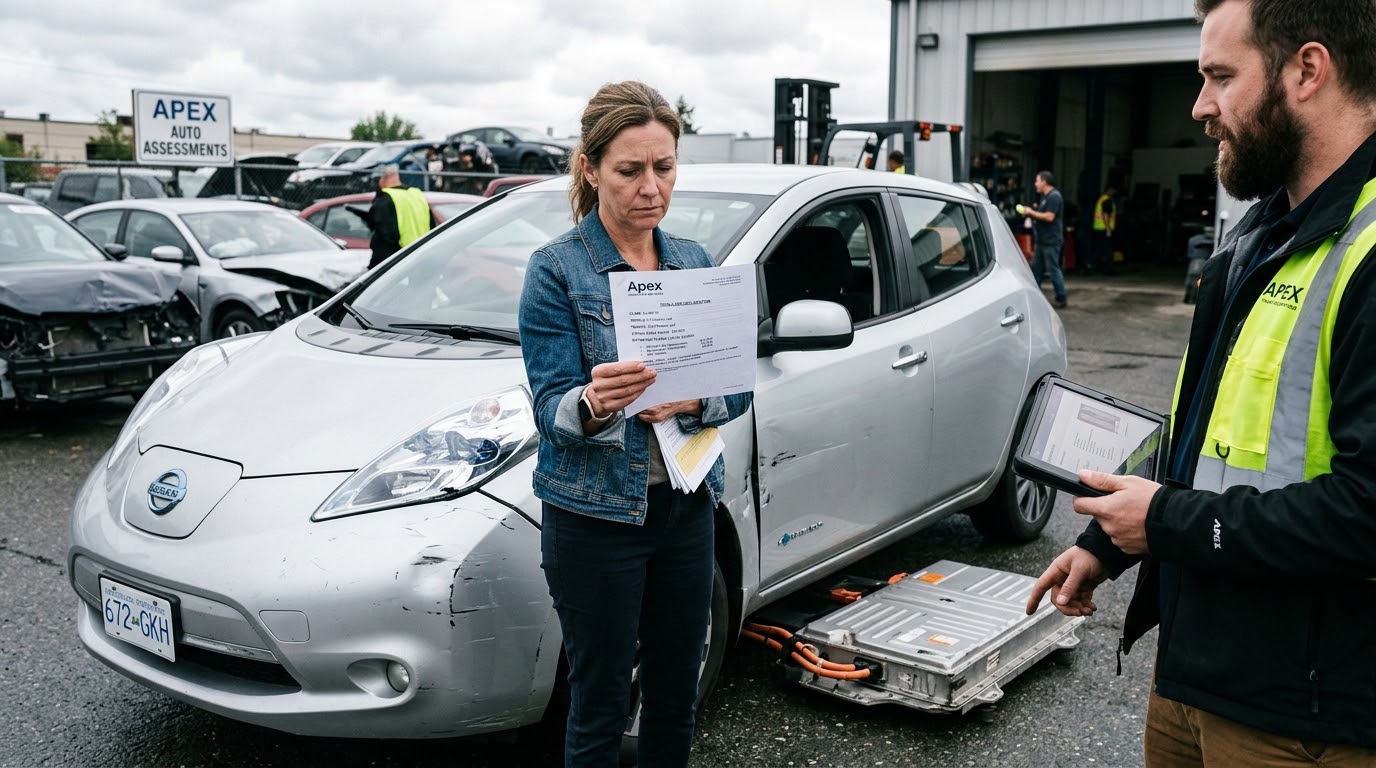
Imagine this. You're sitting in your Tesla Model 3 at a red light. Someone rear-ends you at maybe 15 miles per hour. You step out, survey the damage — cracked bumper, scuffed plastic. You think: $1,500, maybe $2,000 tops.
Then the repair shop puts your car on a lift.
They find a dent in the battery casing. The estimate jumps to $9,000 or $10,000. You don't need a high-speed collision for this to happen. A low-speed rear-end hit. A parking lot impact. Road debris striking the undercarriage. Any of these can compromise the battery casing.
That is the EV insurance crisis in one story.
It's not dramatic. It's not rare. It's happening every day, in driveways and parking lots across the country, to ordinary people who had no idea their car carried this kind of financial risk beneath the floor.
Why EV Repairs Cost So Much More
The engineering that makes EVs extraordinary is the exact same thing that makes them nightmarish to fix.
Several factors push EV repair costs higher: the scarcity of certified repair shops, costlier repairs overall, battery fire risk, pedestrian safety considerations due to how quietly EVs operate, cybersecurity threats, and automated driving features.
That's a long list. And every item on it adds dollars to your premium.
The average claims severity for repairable EVs in the United States recently stood at $6,236 — compared to $5,066 for combustion engine vehicles. That's a $1,170 gap per claim. Not per year. Per individual claim filed.
The battery is the central problem. Data from 2024 to 2025 shows that replacement of an EV battery costs anywhere from $5,000 to $20,000, including parts and labor. For context, that's sometimes more than the resale value of a used EV itself.
The "Total Loss" Trap Nobody Talks About
Here's where things get truly painful.
When battery repair or replacement costs exceed the vehicle's actual value, insurers often declare a total loss. In that case, they'll typically pay the car's actual cash value rather than covering a brand-new pack.
Think about what that means in practice.
A five-year-old EV worth $25,000 that needs a $15,000 battery replacement plus body work can cross the total loss threshold immediately. The insurer doesn't fix it. They write it off. You get a check for the car's current value, and you're left figuring out what to buy next.
This is happening more than people realize. A fender bender that would cost $2,000 to repair on a gasoline car can trigger a total write-off on an EV if the battery housing sustains even minor structural damage. Insurers aren't being cruel. They're being practical. A battery pack that might be compromised is a liability and a potential fire hazard. No insurer will put it back on the road.
The Shortage of Certified Shops Makes Everything Worse
Even when an EV is repairable, actually getting it repaired takes longer and costs more.
Not every body shop can touch a high-voltage vehicle. When a crash requires towing to a specialty shop or a body shop subcontracting specialized technicians, labor and logistics add significantly to claim totals. Insurers pass those costs directly to policyholders through higher premiums.
The technician shortage is real and it's structural. Training a mechanic to safely work around a 400-volt battery system takes time and certification. The supply of qualified EV technicians has not kept pace with the explosion of EVs on the road.
This creates a perfect storm. Fewer shops. Longer repair times. Higher labor rates. And every delay costs money — both for the insurer managing the claim and for the driver paying the premium.
Tesla Owners Are Feeling It Hardest
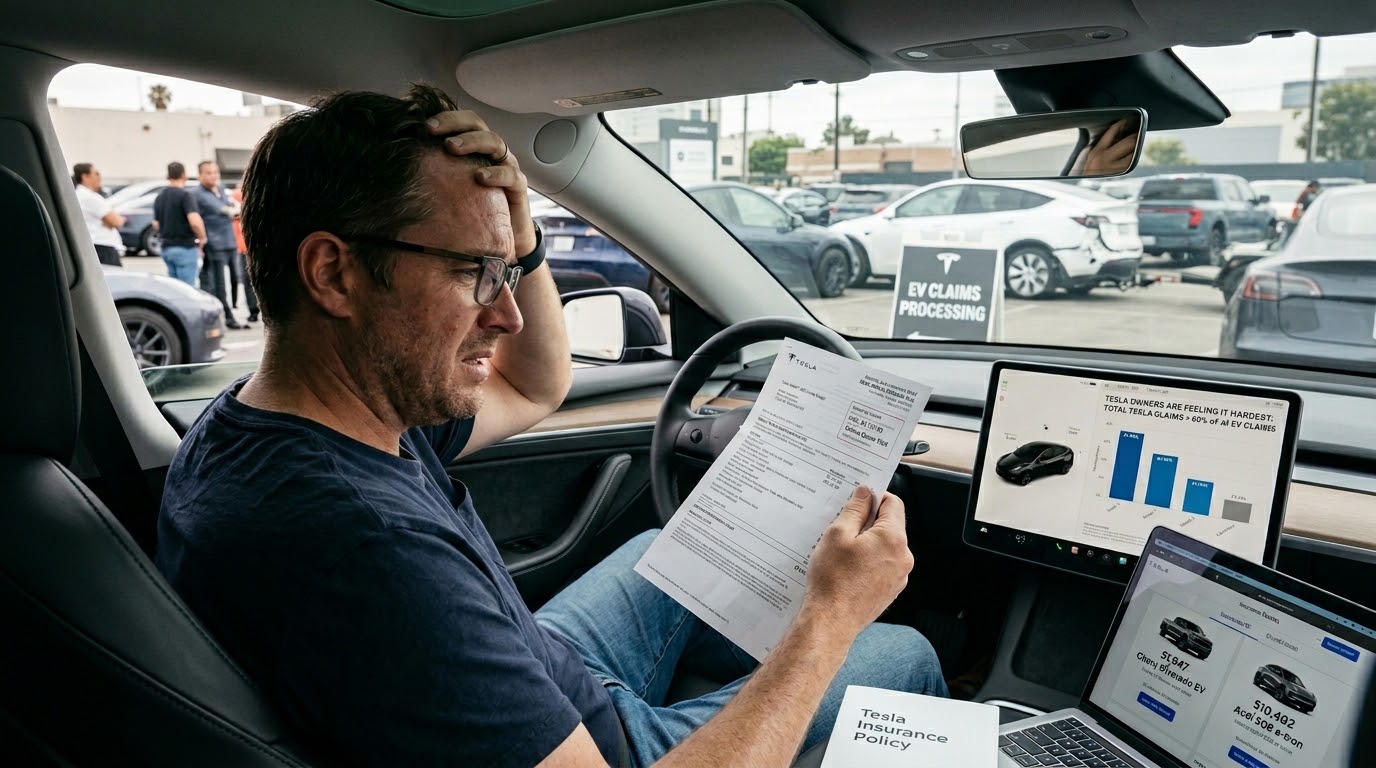
If you own a Tesla, you are at the very center of this crisis.
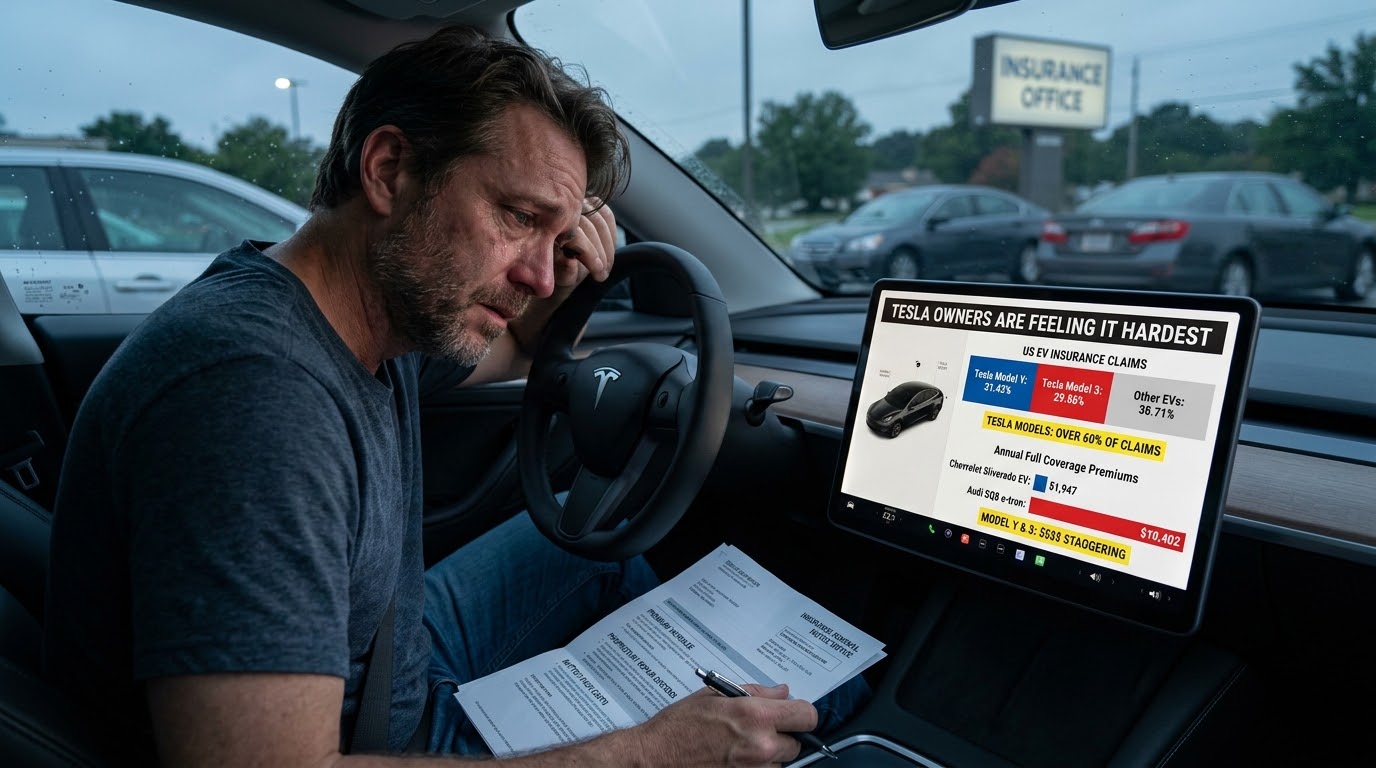
The Tesla Model Y accounts for 31.43% of all EV insurance claims in the United States, with the Model 3 close behind at 29.86%. Between those two models alone, you have more than 60 percent of all EV claims.
Part of this is simply market share — Teslas are the most common EVs on the road. But part of it is structural. Teslas use large battery packs, proprietary repair systems, and body designs that can make even minor collision damage surprisingly expensive to address.
Annual full coverage premiums across the EV market span more than $8,000 in range, from $1,947 for the Chevrolet Silverado EV to $10,402 for the Audi SQ8 e-tron. The difference between the cheapest and most expensive EV to insure is staggering — and most buyers never think to check before signing.
Is There Any Good News?
Yes. And it's important to acknowledge it.
EV repair costs are coming down, albeit slowly. The average claims severity for repairable EVs recently fell 3% year over year. That's a modest drop, but it signals that the industry is adapting.
During 2024 and 2025, many insurers expanded partnerships with manufacturers and repair networks, negotiated battery-repair agreements, and developed EV-specific underwriting teams. Some carriers launched dedicated EV products with tailored deductibles and repair-shop networks, which is gradually improving pricing competition.
Battery costs themselves are also declining. Since the original mass-market EVs in 2012, battery prices have fallen from over $400 per kilowatt-hour to $111 per kilowatt-hour by the end of 2024. That trajectory matters enormously for future insurance pricing.
The direction of travel is positive. But "positive trend" doesn't pay today's premium.
What You Can Actually Do About It
If you already own an EV, or you're seriously considering buying one, here are the moves that matter.
Shop aggressively before you commit. Insurance quotes can vary by hundreds of dollars per year for the exact same vehicle and driver profile. Get at least three to four quotes before finalizing any EV purchase. Some automakers, including Tesla, now offer their own insurance products that may be competitive for their specific vehicles.
Ask about EV-specific discounts. Some insurers now offer dedicated EV policies with features like guaranteed battery replacement value or coverage for home charging equipment damage. These are worth asking about explicitly — they're not always advertised.
Consider gap insurance carefully. If a total loss leaves you owing more on your loan than the car's actual cash value, gap insurance can bridge that difference — keeping a battery-related write-off from turning into a lingering loan balance.
Check repair network coverage in your area before buying a specific model. If the nearest certified repair facility for your EV brand is 90 miles away, your claim experience — and potentially your premiums — will reflect that.
The Uncomfortable Truth the Industry Doesn't Lead With
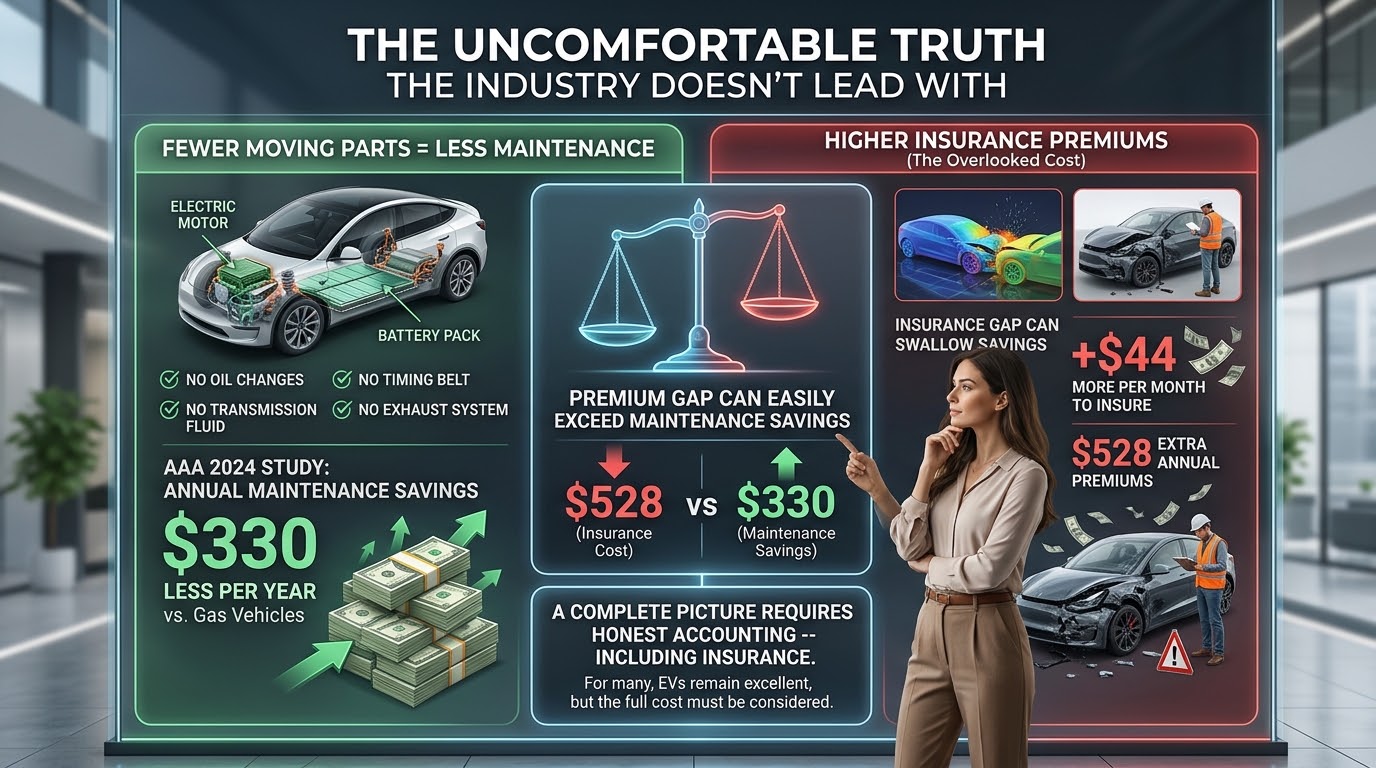
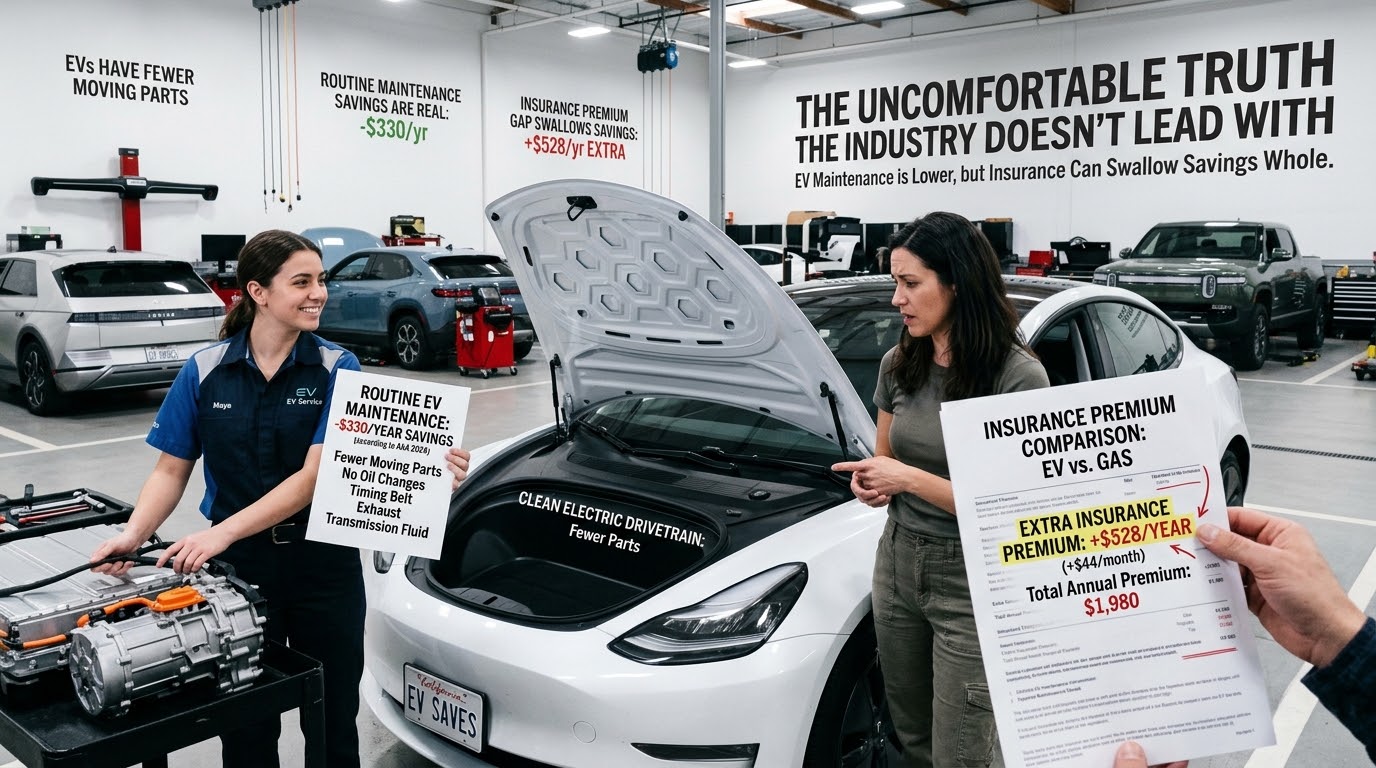
EVs have fewer moving parts than gas-powered vehicles — no oil changes, no transmission fluid, no timing belt, no exhaust system. According to AAA's 2024 Driving Costs study, EVs cost about $330 less per year in maintenance than gas-powered vehicles.
That's genuinely good. Routine maintenance savings are real and meaningful.
But the insurance premium gap can easily swallow those savings whole. EVs cost up to $44 more to insure per month than gas-powered vehicles. That's $528 per year in extra premiums — already greater than the $330 maintenance savings before you account for the risk of a costly collision.
This doesn't mean EVs are a bad financial decision. For many drivers, in many situations, they remain an excellent one. But the complete picture requires honest accounting — and the complete picture includes insurance.
The Conclusion: Eyes Open, Not Eyes Wide Shut
The EV insurance crisis is not a conspiracy. It's not a glitch. It's the predictable result of complex, expensive technology colliding with an insurance industry that is still catching up to a new reality.
The good news is that the industry is adapting. Repair networks are expanding. Battery costs are declining. More insurers are building EV-specific products that reflect actual risk more accurately. The bad news is that right now, today, the premium pain is real — and it's falling disproportionately on drivers who were told that going electric was simply better.
It can be. But only if you go in knowing what you're actually signing up for. So before you fall in love with the next EV you test drive, do one thing: get an insurance quote first. It might be the most important number you see before making the decision.
For more on making smart EV ownership decisions, the U.S. Department of Energy's fuel economy guide and the NAIC's EV insurance resource page are solid starting points for your research.


Comments
Post a Comment
Silahkan anda berkomentar dengan baik, jangan melakukan Spam, jangan menyisipkan link aktif,
terima kasih.