Usage-Based Insurance Is Taking Over America — Safe Drivers Could Save Thousands
Usage-Based Insurance Is Taking Over America — Safe Drivers Could Save Thousands
Published: May 2026 | Reading time: 6 minutes

Imagine paying car insurance based on how you actually drive — not your age, your zip code, or whether you made one mistake a decade ago.
That's not a fantasy anymore. It's happening right now, and millions of Americans are already cashing in.
Usage-based insurance (UBI) is quietly reshaping one of the most expensive bills in American households. And if you consider yourself a safe driver, this might be the single biggest financial shift you've been waiting for.
What Is Usage-Based Insurance, and Why Is Everyone Talking About It?
Usage-based insurance — also called telematics insurance or pay-as-you-drive insurance — is a model where your premium is calculated based on your actual driving behavior rather than statistical assumptions about people who "look like you" on paper.
Insurance companies collect data through a small plug-in device (OBD-II dongle), a smartphone app, or sensors already built into modern vehicles. They track things like:
- How hard you brake
- How fast you accelerate
- What time of day you drive
- How many miles you log each week
- Whether you're on your phone while driving
The result? Your premium reflects you, not some actuarial table built on decades-old assumptions.
The Old System Was Broken — And Most People Never Questioned It
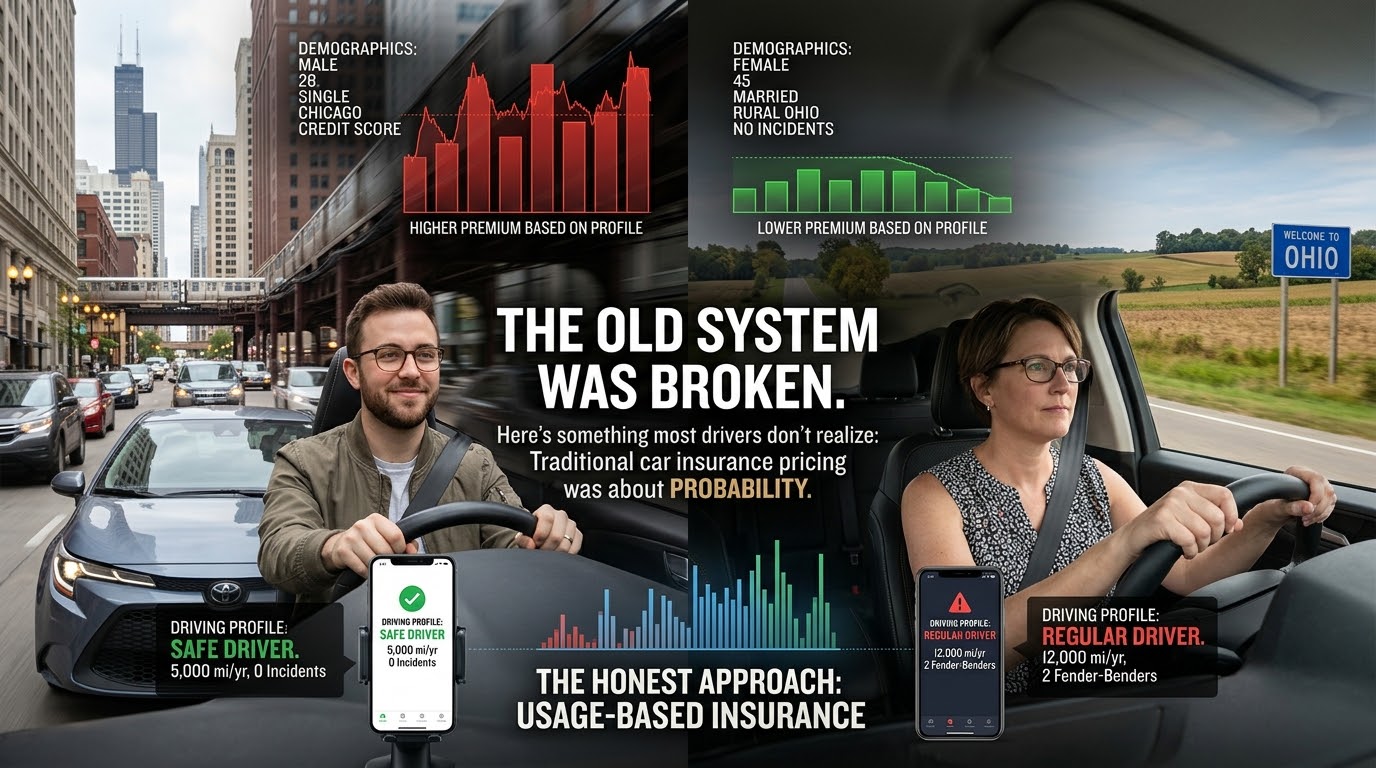
Here's something most drivers don't realize: traditional car insurance pricing was never really about your driving.
It was about probability. Insurance companies pooled millions of drivers into demographic buckets — age, gender, marital status, credit score, occupation — and charged you based on what people in your bucket statistically cost them.
A 28-year-old single man living in Chicago could pay double what a 45-year-old married woman in rural Ohio pays — even if the younger man drives 5,000 miles a year with zero incidents, and the older woman has two fender-benders on her record.
That felt unfair. Because it was.
Usage-based insurance tears that system apart and rebuilds it around something more honest: what you actually do behind the wheel.
The Numbers Don't Lie — Safe Drivers Are Saving Big
This isn't marketing hype. The data is real and it's substantial.
According to the Insurance Information Institute, drivers who opt into telematics programs report average savings of 10% to 30% on their annual premiums. For the average American household spending around $2,000 per year on car insurance, that's $200 to $600 back in your pocket — every single year.
Some programs go even further. Progressive's Snapshot program, one of the earliest and most widely adopted UBI programs in the U.S., reports that its best-performing customers save up to $231 per year. State Farm's Drive Safe & Save program has reportedly helped some customers cut their premiums by up to 30%. Allstate's Drivewise rewards drivers with cash back on top of reduced premiums.
A 2024 report from McKinsey & Company estimated that the UBI market in the United States is expected to grow from roughly $9 billion in 2021 to over $126 billion by 2030. That's not a niche trend. That's a full-scale industry transformation.
Meet Sarah — The Driver Who Didn't Know She Was Overpaying
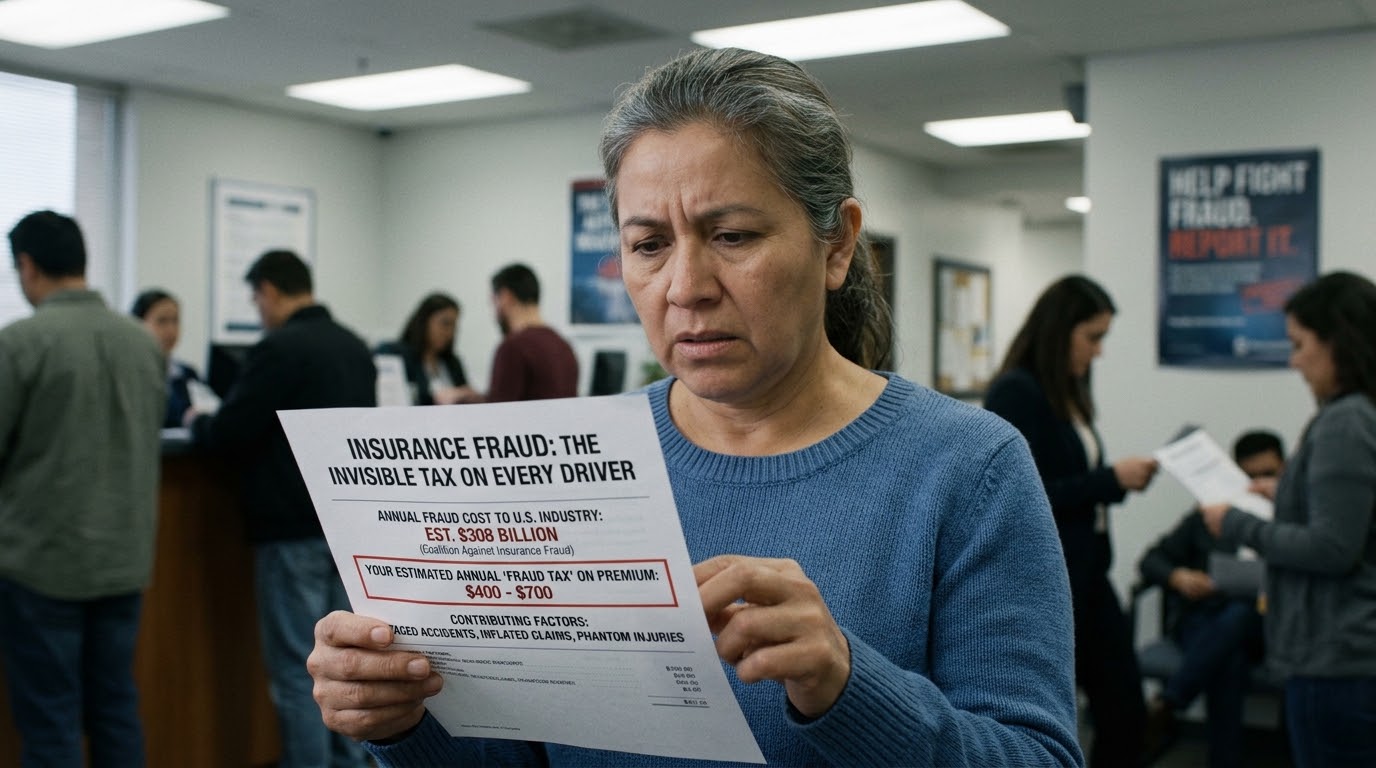
Sarah is 34, lives in Denver, and commutes only three days a week since switching to a hybrid remote work schedule. She drives maybe 7,000 miles a year — well below the national average of around 13,500 miles.
For years, she was paying $1,840 annually for full coverage. Not because she'd had accidents. Not because she had violations. Just because her age bracket, her city, and her vehicle put her in a statistically "higher cost" pool.
When her insurer offered her a UBI program, she hesitated. Will they penalize me? Will they use my data against me? She signed up anyway.
Six months later, her premium dropped to $1,310. That's $530 she's now using to pay down credit card debt.
"I drive carefully because I always have," she told a friend. "Now I'm actually getting rewarded for it instead of subsidizing everyone else."
Sarah's story isn't unique. It's becoming the norm.
How Telematics Actually Works (Without the Tech Jargon)
You don't need to be a tech wizard to understand this.
Most UBI programs start with a trial period — usually 90 days — where your driving is monitored. During this window, the insurer collects your behavioral data and builds a profile specific to you.
Think of it like a report card. Hard braking, late-night driving, and rapid acceleration lower your score. Smooth acceleration, consistent speeds, and daytime driving raise it.
After the trial period, your new rate is set. And in most programs, your rate can only go down — not up — based on your telematics score. That matters. It means there's minimal risk in trying.
Some insurers have moved to continuous monitoring beyond the trial, adjusting rates periodically. Read your specific policy carefully, but the competition among insurers is fierce enough that most are designing programs to attract and retain good drivers — not punish them.
The Privacy Question Everyone Is Asking
Let's be direct about something: yes, telematics means you're sharing data with your insurance company.
For some people, that's a hard stop. And that's a completely valid position.
But it's worth putting this in context. Your smartphone already tracks your location constantly. Your car manufacturer likely collects driving telemetry. Your credit card company builds a detailed behavioral profile every time you swipe.
Insurance companies are collecting a relatively narrow slice of data — focused on driving behavior, not your life history — and in exchange, they're offering real financial savings.
The Electronic Privacy Information Center (EPIC) recommends reading the full data-sharing disclosure before enrolling, and understanding whether your data can be shared with third parties. That's smart advice regardless of which program you choose.
Your comfort level with data sharing is personal. But ignoring UBI entirely because of vague privacy concerns may be costing you hundreds of dollars a year.
Which Programs Are Leading the Market in 2026?
The major players each have their own version of telematics-based pricing:
Progressive Snapshot remains one of the most well-known programs, using a mobile app or plug-in device to track driving habits across a 6-month period.
State Farm Drive Safe & Save links to your vehicle's OnStar or connected car system, making it seamless for compatible vehicles — no extra device needed.
Allstate Drivewise offers a continuous monitoring model with cash rewards in addition to discounts, which appeals to drivers who want ongoing incentives.
Root Insurance takes the most aggressive approach — they base your entire initial quote on a test-drive period, meaning your premium starts personalized from day one rather than adjusting from a standard baseline.
Nationwide SmartRide and Liberty Mutual RightTrack round out the competitive landscape with competitive discount structures for qualifying drivers.
Is Usage-Based Insurance Right for You?
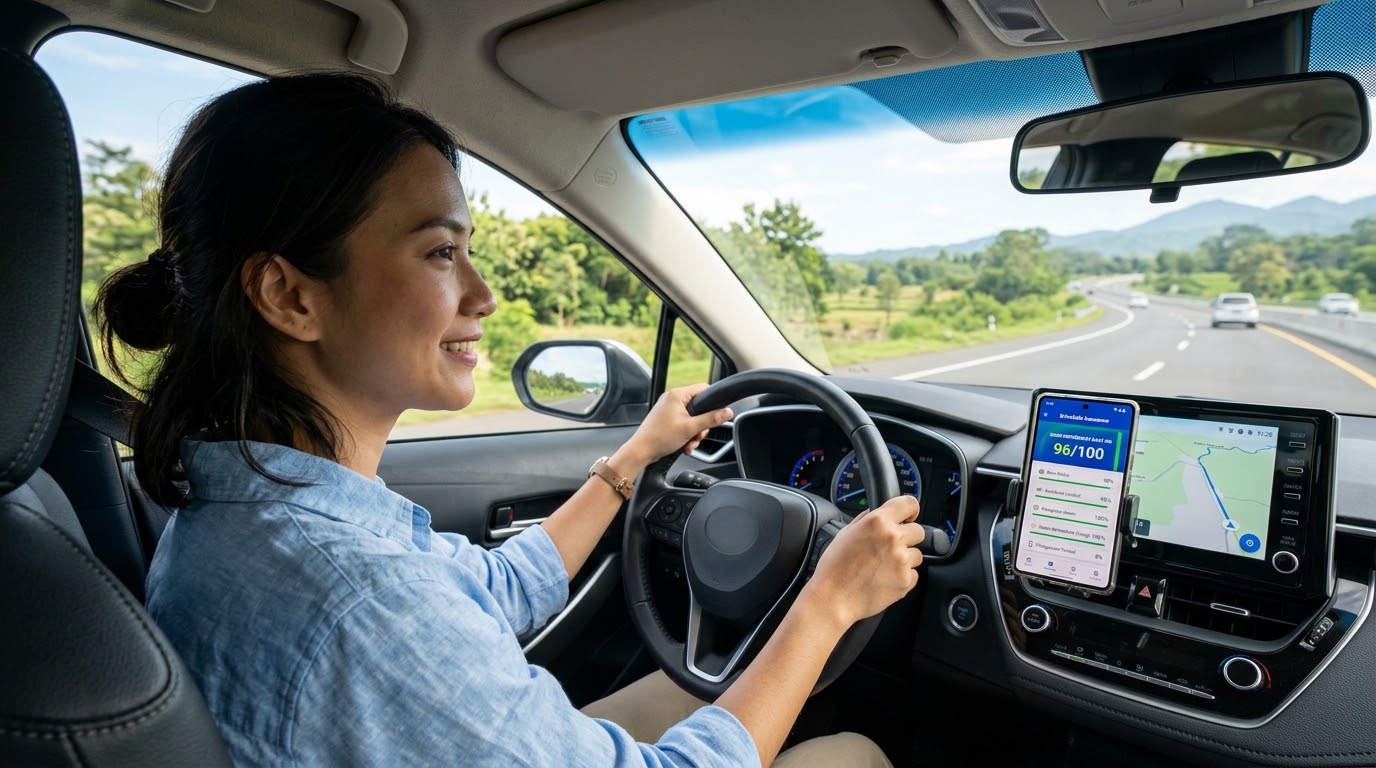
UBI tends to favor a specific kind of driver. Ask yourself these questions:
Do you drive fewer miles than average? Do you avoid driving late at night or early morning? Do you brake smoothly and accelerate gradually? Do you stay off your phone behind the wheel?
If you answered yes to most of those, you are almost certainly being overcharged by traditional insurance models. UBI was built for drivers like you.
If you drive long hours, have an aggressive driving style, or frequently navigate high-traffic urban roads late at night — UBI might not deliver the same savings. But it still costs nothing to try, especially with programs that guarantee your rate won't increase from your baseline.
The Bottom Line: Safe Driving Should Pay Off
For too long, responsible drivers have quietly subsidized risky ones. The premiums were pooled, the rates were averaged, and cautious behavior went financially unrewarded.
Usage-based insurance changes that equation. It's not perfect — privacy concerns are real, data practices vary by provider, and driving conditions aren't always within your control. But for tens of millions of American drivers, it represents the most meaningful opportunity to reduce insurance costs in a generation.
If you drive safely, drive less than average, and have been paying standard premiums for years without incidents — there is a very good chance you are leaving hundreds of dollars on the table every single year.
The technology exists. The programs are proven. The savings are documented.
The only question left is: what are you waiting for?
For more on how telematics insurance works and which programs are available in your state, visit the National Association of Insurance Commissioners at naic.org or your state's department of insurance website. To compare top programs side by side, resources like NerdWallet's auto insurance comparison tool offer unbiased breakdowns updated regularly.
Disclaimer: Premium savings vary by insurer, location, driving behavior, and individual policy terms. Always review full program disclosures before enrolling.

Comments
Post a Comment
Silahkan anda berkomentar dengan baik, jangan melakukan Spam, jangan menyisipkan link aktif,
terima kasih.