Why Millions of Americans Are Switching Car Insurance Companies in 2026
Why Millions of Americans Are Switching Car Insurance Companies in 2026
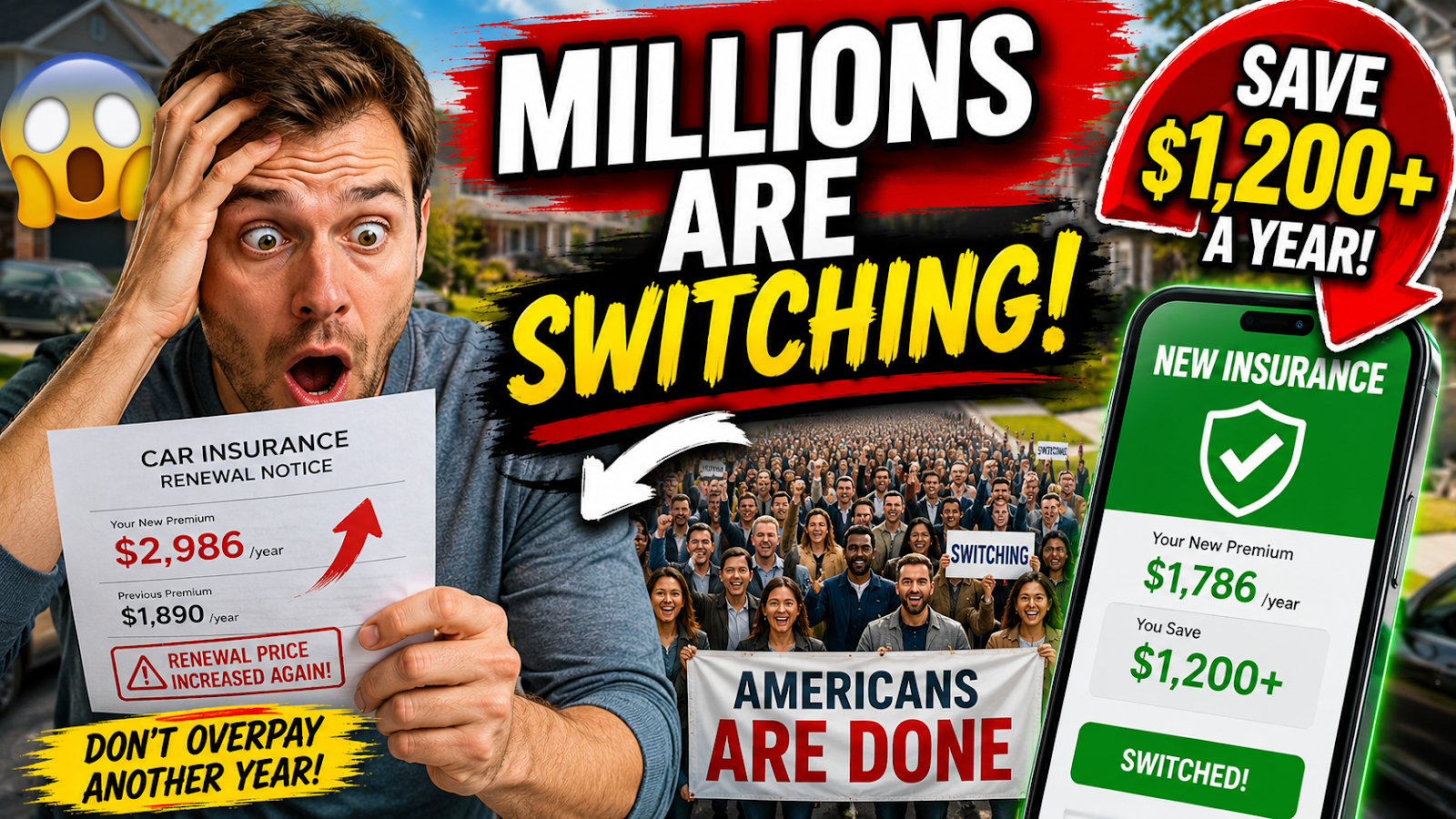
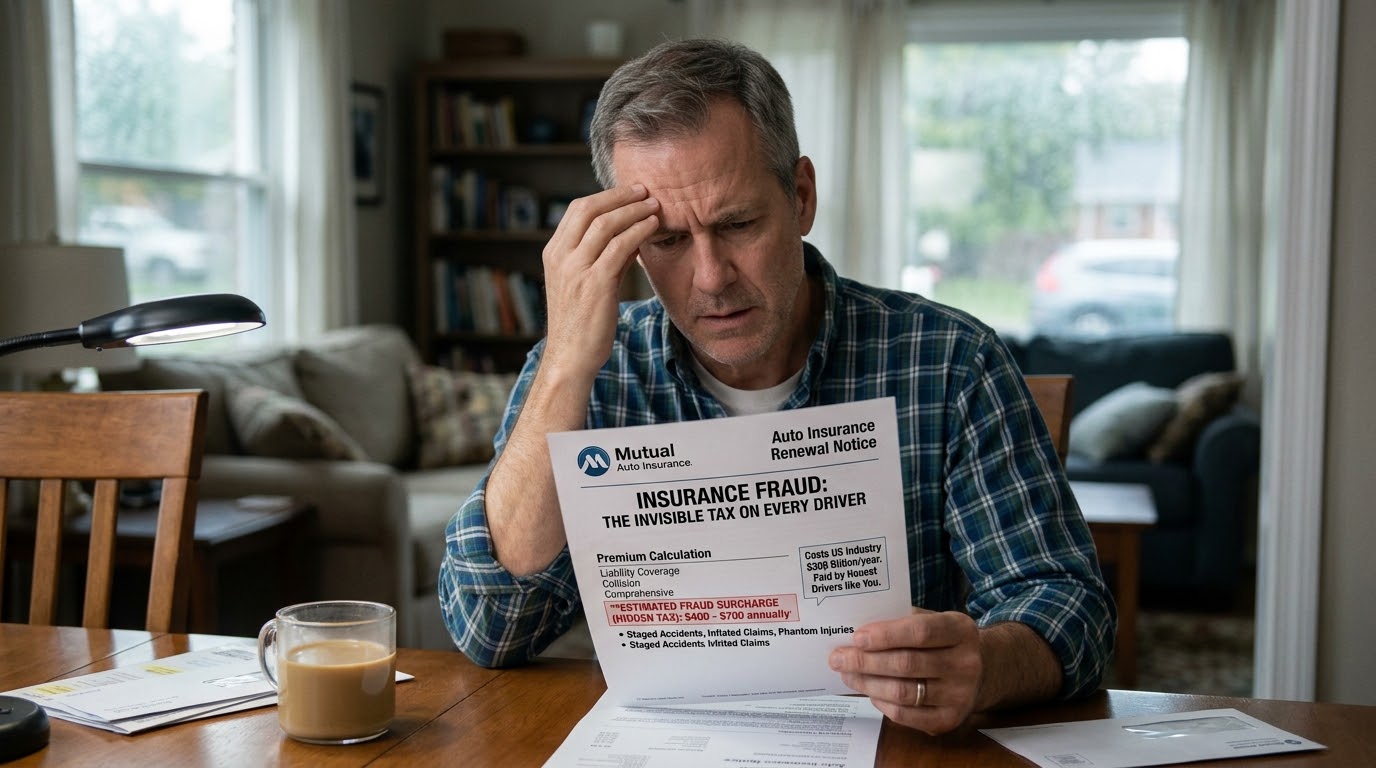
You open your renewal notice. Same car. Same driving record. Same address. But the number at the bottom? Higher than last year. Again.
That's the moment millions of American drivers have experienced — and it's exactly why a record number of them are now doing something they never thought they'd bother with: switching car insurance companies.
This isn't just a trend. It's a full-blown movement reshaping one of the largest industries in the country.
The Numbers Don't Lie — Something Big Is Happening
Let's start with the data, because the scale of what's happening right now is genuinely striking.
In 2026, one-third of all auto insurance holders — 33% — say they are likely to switch providers within the next 90 days. That number marks a seven-point jump from just a year ago, and it's the highest switching intent recorded since 2018.
The annual shop rate has climbed to a new record high: 47.1% of all active policies were shopped at least once in the previous 12 months — up nearly 6 points from two years ago.
Consumer Reports surveyed 40,000 policyholders and found that 30% had switched carriers at some point in the last five years, while JD Power reported that well over half of all policyholders shopped around in 2024.
These are not small numbers. This is a mass exodus — driven by real frustration, real financial pain, and a real desire to take back control.
Why Are So Many Drivers Walking Away?
Here's the truth most insurance companies don't want you to sit with too long.
For years, loyalty was rewarded with higher premiums. You stayed. You paid. And quietly, your rate crept up — not because you became a worse driver, but because the company knew you probably wouldn't leave.
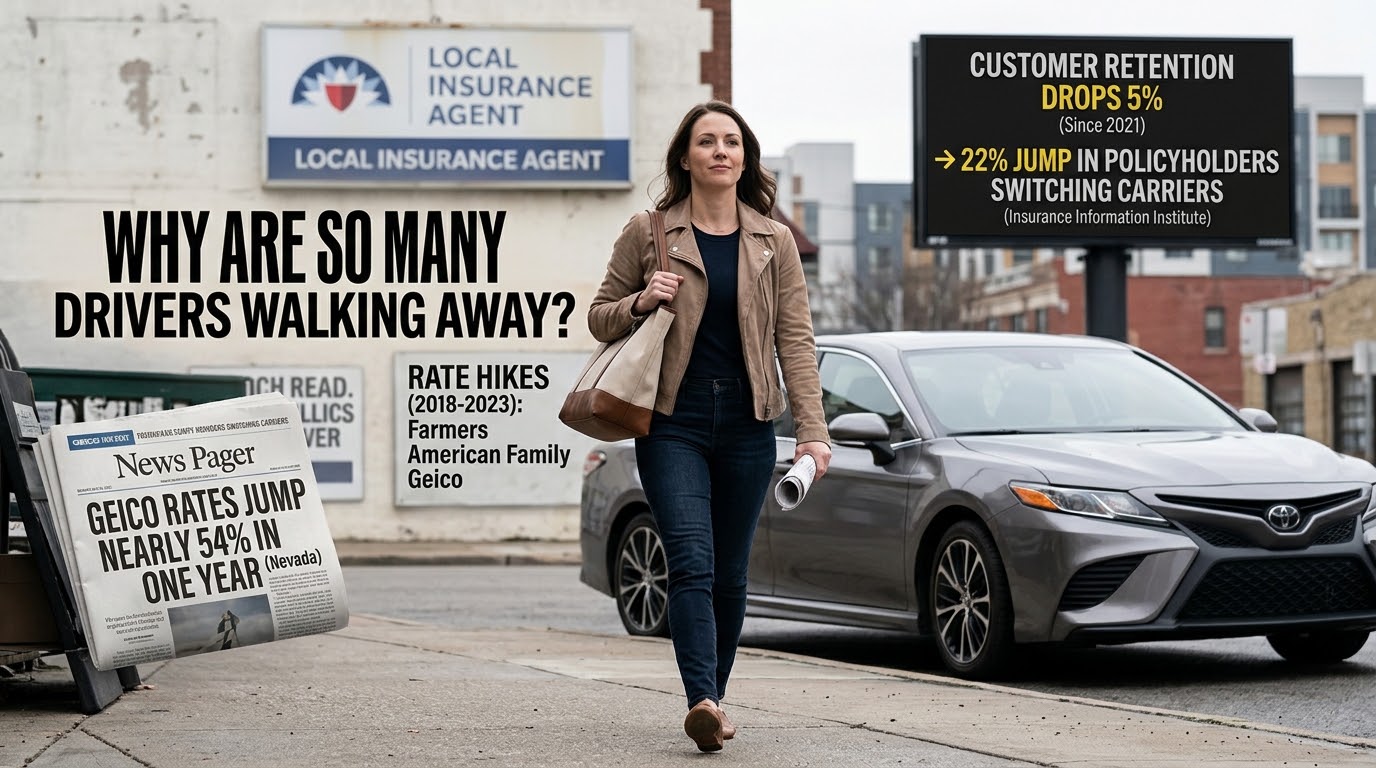
Since 2021, customer retention in the auto insurance industry has dropped 5%, translating into a 22% jump in policyholders switching carriers, according to the Insurance Information Institute.
That 22% spike didn't happen by accident. It happened because drivers finally started doing the math.
Among the key drivers behind rate changes were major carriers like Farmers Insurance, American Family Insurance, and Geico — which ranked as the top three companies for rate hikes between 2018 and 2023. In Nevada alone, Geico increased rates by nearly 54% in less than a single year.
54% in one year. For the same driver. The same car. The same risk profile.
If that doesn't make you want to pick up the phone and get a new quote, nothing will.
The Hidden Reason: You're Probably Overpaying Right Now
Here's something uncomfortable to consider.
In one major survey, 56% of drivers admitted they've stayed with their insurer despite believing they could get a better deal if they switched.
More than half. Knowingly overpaying. Staying anyway.
Why? Inertia. The assumption that switching is complicated. The belief that "it probably won't save me that much anyway."
That assumption is expensive. Based on an analysis of 2026 rates across 12 major carriers, drivers save between $200 and $900 a year when they switch — and the entire process takes under an hour.
Drivers who compare policies could save up to $1,100 annually.
An hour of your time. Over a thousand dollars back in your pocket. That math is hard to argue with.
Who Is Switching — And Why It Might Surprise You
You might picture the typical "insurance switcher" as a young, tech-savvy driver hunting for the lowest price online.
The reality is more interesting.
While switching intent is high across all demographics, it's older consumers — policyholders aged 66 and older — who recorded the highest year-over-year shopping growth in Q4 2025, at 11%, a trend that has persisted since early 2023.
Retirees on fixed incomes. People who've been with the same insurer for decades. They're the ones leading the charge now — because when every dollar matters, a $700 annual savings isn't a bonus. It's a necessity.
Among younger drivers aged 18 to 29, a majority — 56% — say they are at least somewhat likely to change auto insurance providers within the next 90 days.
Both ends of the age spectrum, moving at once. That's not a demographic quirk. That's the market speaking.
What's Actually Driving Rates Up (And Down) in 2026
To understand why switching makes sense, you need to understand what's actually happening to premiums.
Vehicle repair costs have surged in recent years, and potential tariffs on imported auto parts could push costs even higher in 2026. Modern cars packed with sensors, cameras, and safety systems mean even minor fender-benders are expensive to fix — and insurers pass those costs directly to you.
That's the bad news. Here's the good news.
More than half of U.S. states are expected to see car insurance rates drop in 2026. Five of the 10 largest car insurance companies are expected to lower their rates, and drivers who switch from the most expensive option to a cheaper provider could save more than $1,000 per year.
Drivers insured with State Farm could see a decrease of around 4% when they renew in 2026, while midsize companies like NJM may raise rates by as much as 21%.
The gap between the best and worst deals is enormous right now. That gap is opportunity — but only for drivers who are actually looking.
The Rise of AI-Powered Shopping: Switching Has Never Been Easier
A few years ago, switching insurance felt like a project. Multiple phone calls. Confusing paperwork. The nagging worry you'd accidentally be uninsured for a day.
That friction is largely gone now.
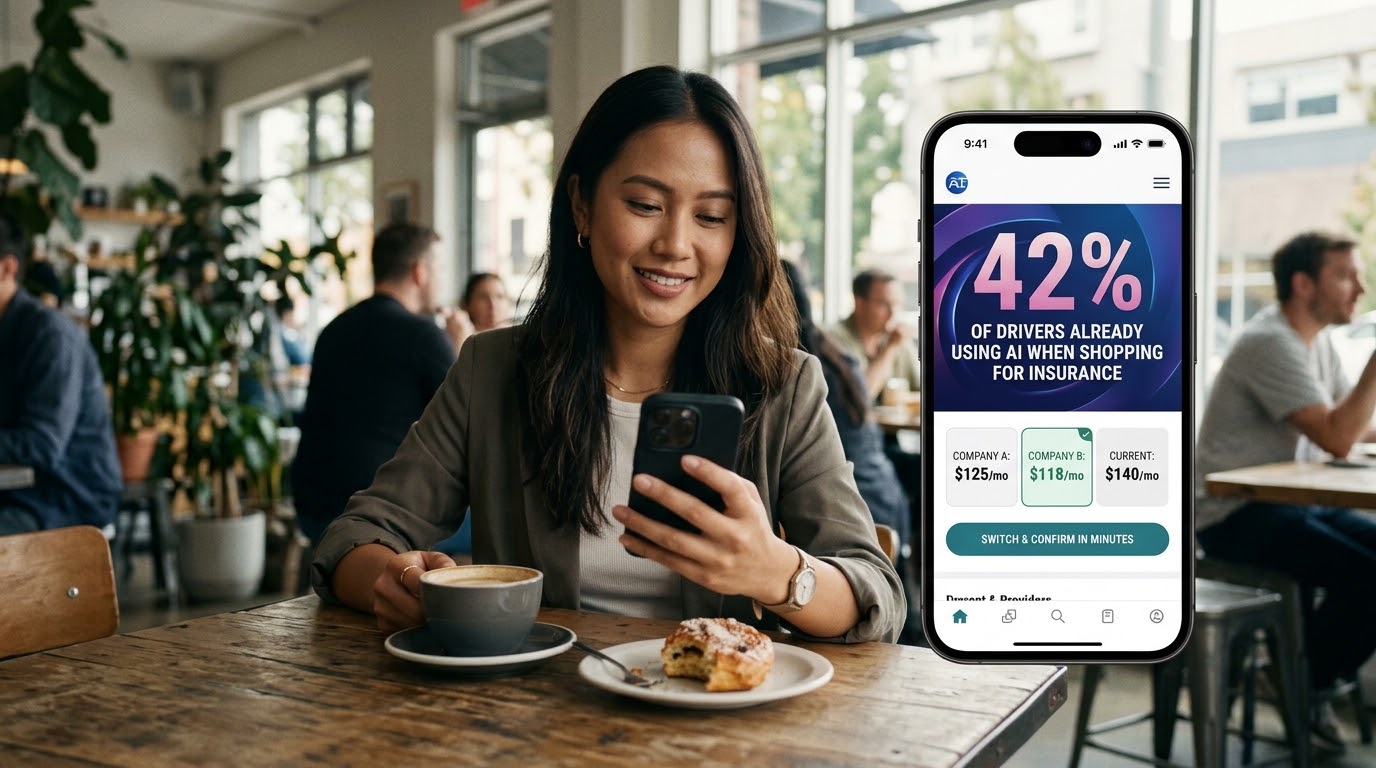
Advances in AI are making comparison shopping faster and simpler, with 42% of drivers already using AI when shopping for insurance.
Comparison platforms now let you enter your information once and receive side-by-side quotes from dozens of companies in minutes. You can switch, confirm new coverage, and cancel your old policy — all before lunch.
The process takes under an hour: get quotes, buy the new policy before canceling the old one, and notify your lender if applicable. You can switch at any point in your policy term, even if you just renewed.
There is genuinely no logistical reason to delay this conversation with yourself anymore.
What to Look For When You Switch — Beyond Just Price
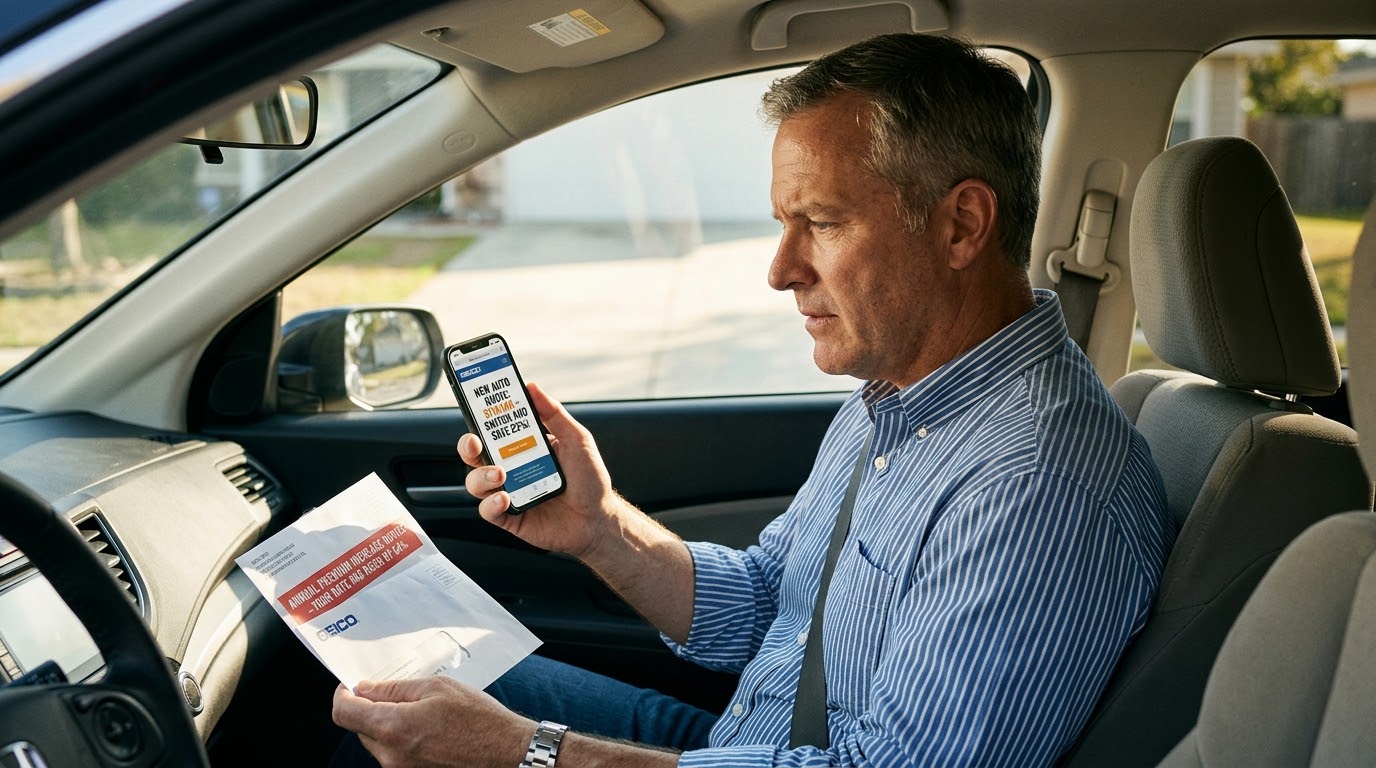
This is where a lot of people make a costly mistake.
They find the cheapest policy. They sign up. Then something happens — an accident, a claim, a dispute — and they discover that "cheap" came with a catch: slow claims processing, poor customer service, or coverage gaps they didn't fully understand.
Price matters. But it's not the only thing that matters.
When comparing policies, look at the claims satisfaction rating. Check how the company handles disputes. Understand exactly what your deductible means in a real-world scenario. Look for discounts tied to safe driving behavior — some telematics programs can save drivers up to 30% on premiums if they demonstrate responsible habits.
The best switch isn't always the cheapest option. It's the best value at the right price.
A Quick Story From the Road
Consider Maria, a 54-year-old teacher from Ohio who had been with the same insurance company for 19 years. Every year, her premium nudged up slightly. She figured that's just how it worked.
Last spring, her daughter mentioned she'd switched providers and saved $60 a month. Maria decided to spend one Saturday afternoon comparing quotes online.
She found a policy from a competitor offering nearly identical coverage for $74 less per month. Same deductible. Same liability limits. Same roadside assistance.
That's $888 back in her pocket every year. For doing something that took less time than watching a Netflix episode.
"I felt a little silly," she said, "that I'd waited so long."
Maria's story is playing out in households across the country right now — in every state, every income bracket, every age group.
When Is the Right Time to Switch?
Honestly? Now is as good a time as any.
You don't need to wait for your renewal. You don't need a specific reason. You can switch mid-policy, receive a prorated refund from your old carrier, and activate new coverage immediately.
The one rule: never cancel your old policy before your new one is confirmed and active. A single day without coverage can cost you far more than any premium savings.
Experts recommend getting quotes at least once a year — ideally before your renewal date arrives. If your rate goes up at renewal, that's your strongest signal to shop immediately.
The Bottom Line: Loyalty Should Be Earned, Not Assumed
The insurance industry was built on the idea that customers stay. That inertia is the product.
But 2026 is proving that assumption wrong — loudly, and at scale.
Switching intent has reached the highest level in nearly a decade, with millions of Americans actively reconsidering who holds their policy. And with loyalty increasingly fluid, the power is shifting back to the driver.
You work hard for your money. Your car insurance company should work hard to keep your business.
If they're not? There are dozens of companies that will — at a better price, with better service, starting today.
The only question left is: what are you waiting for?
Ready to start comparing? Use a reputable comparison tool like NerdWallet, The Zebra, or Insurify to get quotes from multiple carriers in minutes — and find out exactly how much you could be saving right now.

Comments
Post a Comment
Silahkan anda berkomentar dengan baik, jangan melakukan Spam, jangan menyisipkan link aktif,
terima kasih.